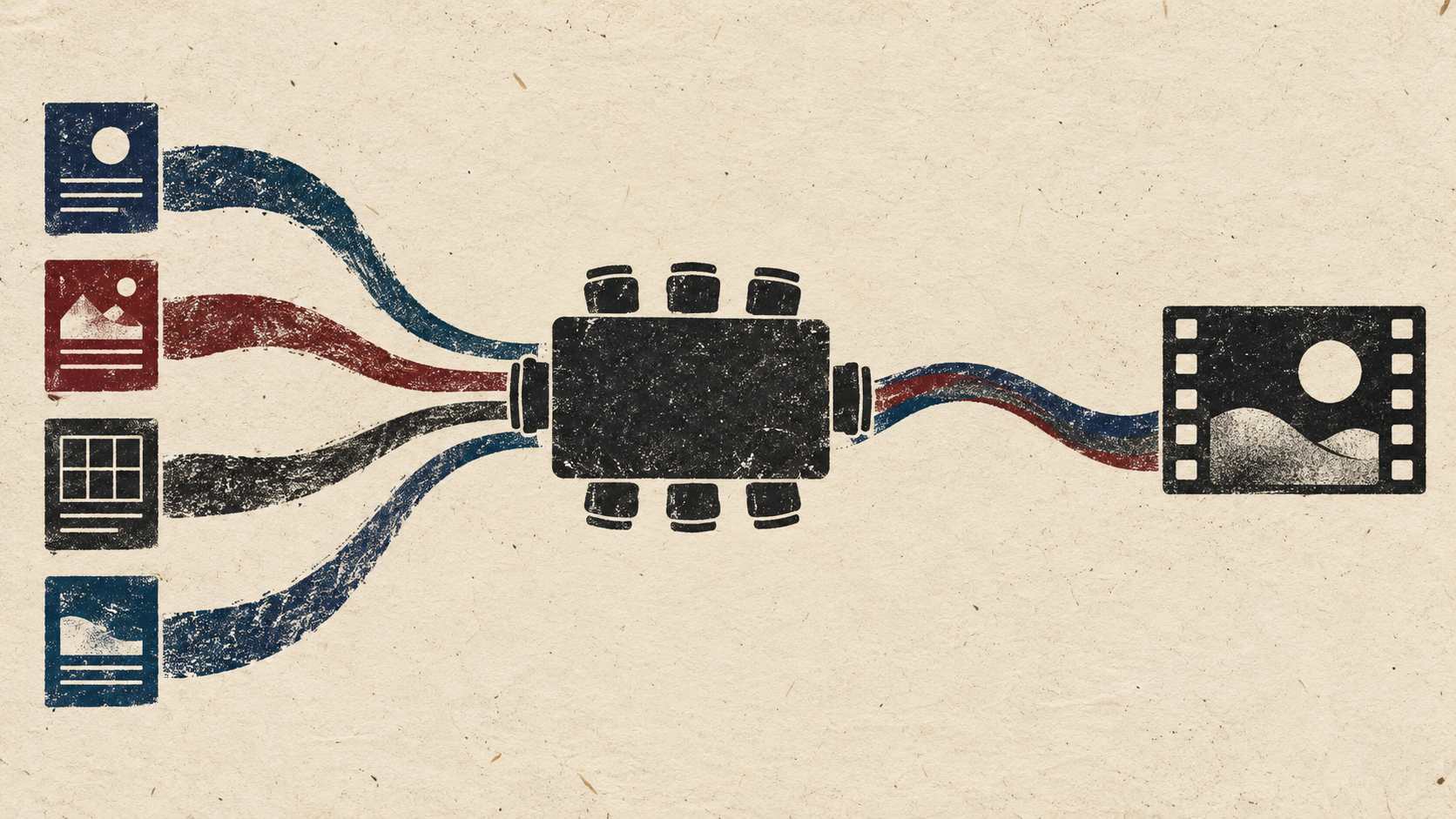
The composer is hired, the broad deal is agreed and everyone wants music to start. This is often the moment when the project becomes least specific. The director talks about intention, editorial talks about pace and production watches the calendar. Each department quietly assumes that the others are looking at the same film.
I treat the first meeting as a production kickoff, not a tour of everyone’s favorite scores. Its job is to turn scattered expectations into working decisions. When it ends, I need to know which picture is authoritative, who approves what, what remains open and what I am expected to deliver next.
Put decision-makers in the room
A small meeting with authority is more useful than a large call where nobody can commit. On a feature or short, I usually need the director, producer and editor represented. A studio, network or agency stakeholder should join when their approval will genuinely control the next step.
The crucial question is who consolidates notes. Multiple perspectives can improve the score. Multiple uncoordinated emails usually create a new problem for the composer to solve. One person should reconcile contradictions before feedback leaves production.
If an essential executive cannot attend, define what can be approved without them. A provisional decision is workable when everyone labels it provisional. A supposed approval that disappears three days later is just delayed uncertainty.
Circulate the right materials first
I want to watch the project before discussing it. Production should send a clearly named picture export with the frame rate, version and visible timecode when useful. The handoff must say whether the film is at picture lock, close to lock or still structurally fluid.
A concise synopsis, post-production calendar and existing temp track should arrive with it. A playlist alone is not a brief. For each major reference, I want to know whether the team responds to its pace, restraint, instrumentation, space, structure or dramatic function.
Known constraints belong in this package. Temporary dialogue, unfinished VFX, voice-over, fixed durations, live-player assumptions and alternate-version requirements can all affect composition. Withholding them to preserve creative freedom mostly preserves the freedom to redo work.
Start with story, not genre
My first question is not “What style do you want?” I ask what the scene should let the audience feel and what the score must avoid explaining. Who owns the point of view? When should the audience know more than the character? Where should uncertainty remain?
I also look for productive contradictions. A director may want bold music while protecting a quiet performance. Editorial may have shaped the cut around a strong pulse while the producer wants the final score to feel less driven. These disagreements are ordinary. The kickoff should surface them before they become rejected cues.
Silence belongs in this discussion. Marking a sequence as intentionally unscored is a creative decision, not an empty slot waiting for music.
Define what the temp track means
A temp can communicate function or freeze a solution. I ask for one sentence about every important reference. “We like how late it enters” gives me a usable principle. “Do this without copying it” does not.
The editor may also have built cuts, transitions and effects around the temp. Replacing it with an original score can therefore require more than a new audio file. The new cue may follow the same structural landmarks, or editorial may need to release a few of them.
This conversation stops the temp track becoming an opponent. It often contains accurate information about the scene. My job is to isolate that information and answer it with a language that belongs to this project.
Map the approval chain
I separate approvals into stages. First, the team approves dramatic function and musical language. Then mockups are approved against picture. Finally, mixes, masters and stems are checked as deliverables.
Each stage needs an owner and a response window. A verbal decision can be captured in a short written recap. That prevents an enthusiastic “yes” from turning into a new direction after orchestration or recording has started.
The meeting should also define what approval means. A locked cue may still receive a small timing or mix adjustment. A new dramatic intention, new duration or new picture version is different. Naming that difference protects the schedule without making the relationship rigid.
Build backward from the dub
I start with the final dub and work backward. Masters and stems must reach the stage before the mix. Final revisions need approval before delivery. Writing, production and any live recording need protected time before those revisions.
The kickoff should end with one concrete first milestone. It might be a musical direction document, two short tests or the first sequence. “Send something soon” is not a milestone. It is an invitation for everyone to imagine a different deadline.
Response time belongs in the schedule too. If production takes several days to consolidate notes, the next writing window cannot remain unchanged by optimism alone.
For US productions, I also want the composer deal memo and any work-for-hire discussion separated from the creative agenda but resolved early enough to support the schedule. The meeting should not improvise legal terms, yet scoring should not advance on assumptions about ownership, credit or recording costs.
Specify handoffs and deliverables
Who receives the music, and for what purpose? Editorial may need stereo review files while the re-recording mixer expects organized stems. Marketing may need cutdowns or an alternate ending. These are different deliverables, not a folder of interchangeable exports.
I record file format, naming, time reference, version structure and likely alternates. Deliverables are not paperwork added after composition. Their design can affect arrangement, transitions and session organization.
The score and sound-design boundary also needs an owner. When both departments create texture, impacts or transitions, early coordination prevents duplicate work and a crowded final dub.
Send a short written recap
After the meeting, I summarize the picture version, dramatic direction, annotated references, approval owners, schedule, first milestone and provisional deliverable list. I keep decisions separate from open questions.
Not everything needs an answer on day one. Every open question does need an owner and a date. Otherwise it tends to return as a surprise when the answer has become expensive.
The recap can fit on one page. Its value is not administrative. It gives the project a shared memory when picture changes, new stakeholders arrive or fatigue starts rewriting what everyone remembers.
A strong kickoff does not produce the score. It creates the conditions for the score to be evaluated fairly. The composer knows what to investigate. Production knows what it must decide. The first cue can finally answer the same film for everyone in the room.