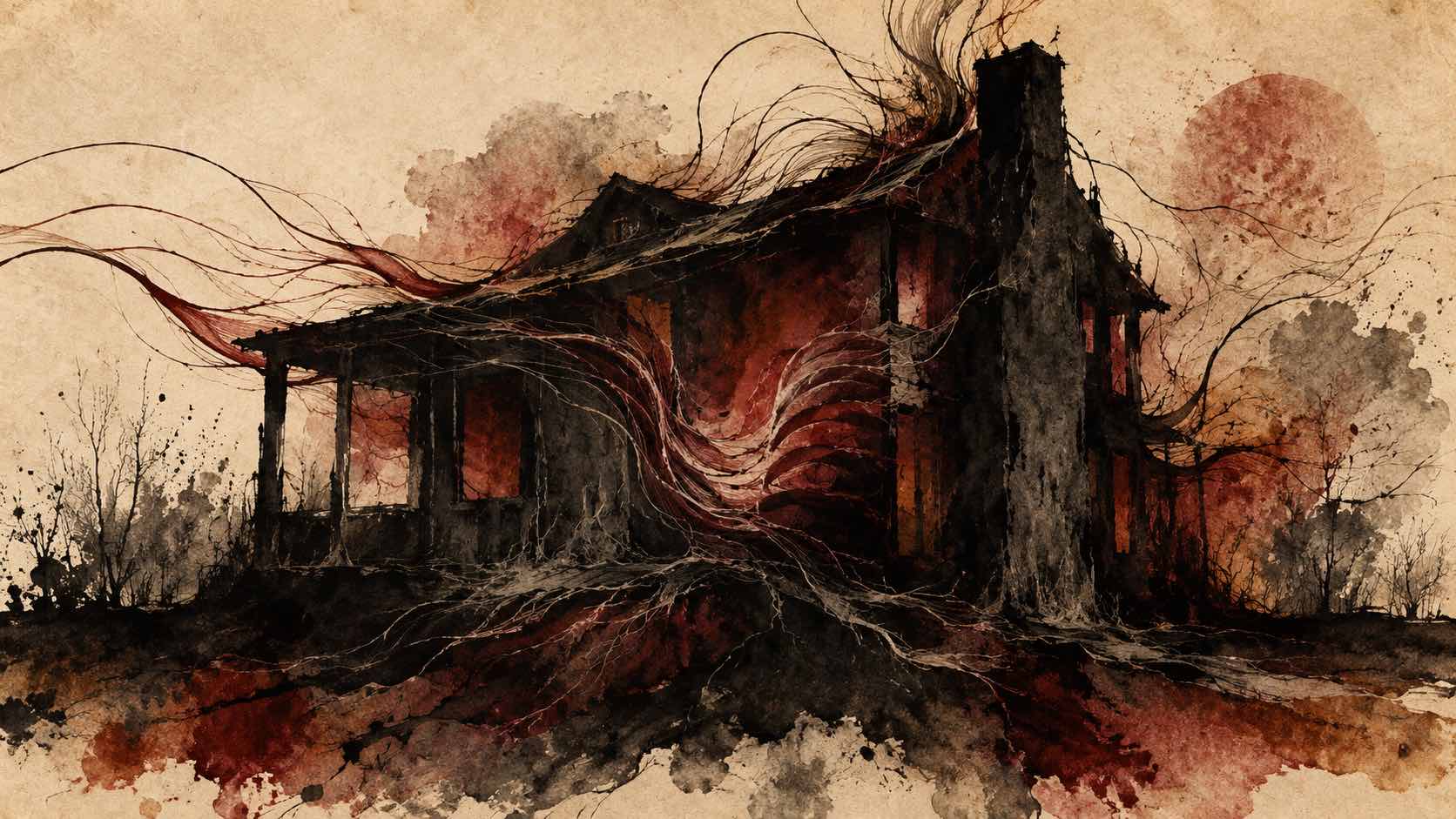
In an interview published by UnderScores on October 2, Douglas Cavanna and Xavier Caux describe how they work together as Double Danger. Their score for Sébastien Vaniček’s Evil Dead Burn is a useful production case because one of its central ideas is unusually concrete: the house is imagined as part instrument, part character and part living organism.
Waxwork Records uses the same description in its official soundtrack release. The phrase could have remained a neat marketing line. The interview provides the missing production detail: an early palette, explicit exclusions, pre-picture demos, processed performers and a tightly integrated two-composer workflow.
The palette came before individual cues
Double Danger say their conversations with Vaniček begin with emotion, characters, locations and symbols rather than musical references. Together they define the film’s instruments, textures and colours, including sounds they agree not to use.
That last category matters. Horror offers a large collection of familiar signals. Without exclusions, a score can solve scenes efficiently while sounding like a survey of the genre. A restricted palette gives breaths, groans, voices and electronics a shared origin.
The house concept then becomes an approval tool. A new sound is not accepted simply because it is frightening. The team can ask whether it belongs to this location and this film. Conceptual language starts doing practical work.
The score moved from script to cut
The duo describe two writing phases. They first build demos from the script and initial director conversations, before picture is available. When early cuts arrive, they test those ideas against the film. Some survive, some develop and others disappear. Further material is then composed directly to picture.
This avoids treating either stage as sacred. Writing only to timecode can make a cue follow editorial events without developing an identity. Writing only from the script can produce strong standalone material that ignores the actual duration, performance and dialogue.
The handoff between phases is an important part. A demo is a hypothesis, not a promise. The cut tests its dramatic value. Picture lock may still be distant, but version control and clear review questions can stop those tests becoming random rewrites.
Voices were recorded, then rebuilt
Double Danger report recording twenty-four choir singers in Skopje, North Macedonia, alongside several solo performers. They name Julia Jérosme, Julien Cassarino and Jérémy Barlozzo. The recordings were layered, saturated and transformed after the sessions.
The stated brief was to suggest a spiritual dimension without pointing to a specific religion. That distinction affects more than orchestration. It can guide vocal language, articulation, register and processing. The choir is not merely there to enlarge the score. It becomes an unseen presence attached to the house.
This is also why live recording and production are not opposing choices. Human breath and ensemble variation create material that the composers can then manipulate. The processing extends the performance rather than replacing it.
Two composers shared one workstation
The most revealing workflow detail is physical. Cavanna and Caux say they work together in the same studio, at one computer, literally passing the mouse between them. While one handles the construction, the other steps back from the technical process and watches the scene for feeling and narrative sense.
That creates a live internal review. In the workflow they describe, both perspectives are present during the writing, although each can occupy a different role at a given moment.
Keeping both composers in the room at once uses both people’s time, while potentially shortening the feedback loop between craft and dramatic judgement. For a director or producer, a practical question remains: how does the duo deliver clear responses during approvals? The interview documents their shared writing process, but not the entire approval chain.
Franchise continuity did not mean quotation
The composers revisited earlier Evil Dead films and scores, including Joseph LoDuca’s work. They frame that research as understanding the franchise, not reproducing its existing musical surface.
That is a useful distinction for any established property. Continuity can come from an attitude toward invention, scale or risk. It does not have to mean importing recognisable motifs or orchestrations. The duo specifically connect earlier scores with composers turning constraints into creative identity.
The interview and official release document intent, personnel and workflow. They do not prove that every choice succeeds in the final dub, and I would not use them as a substitute for analysing the film itself.
They do reveal how a strong headline concept can become a production system. “The house is an instrument” shaped the palette, the vocal sessions, the sound manipulation and the criteria for new material. That is the transferable lesson: a score identity becomes useful when it guides decisions from the first script conversation through the cut, recording and deliverables.