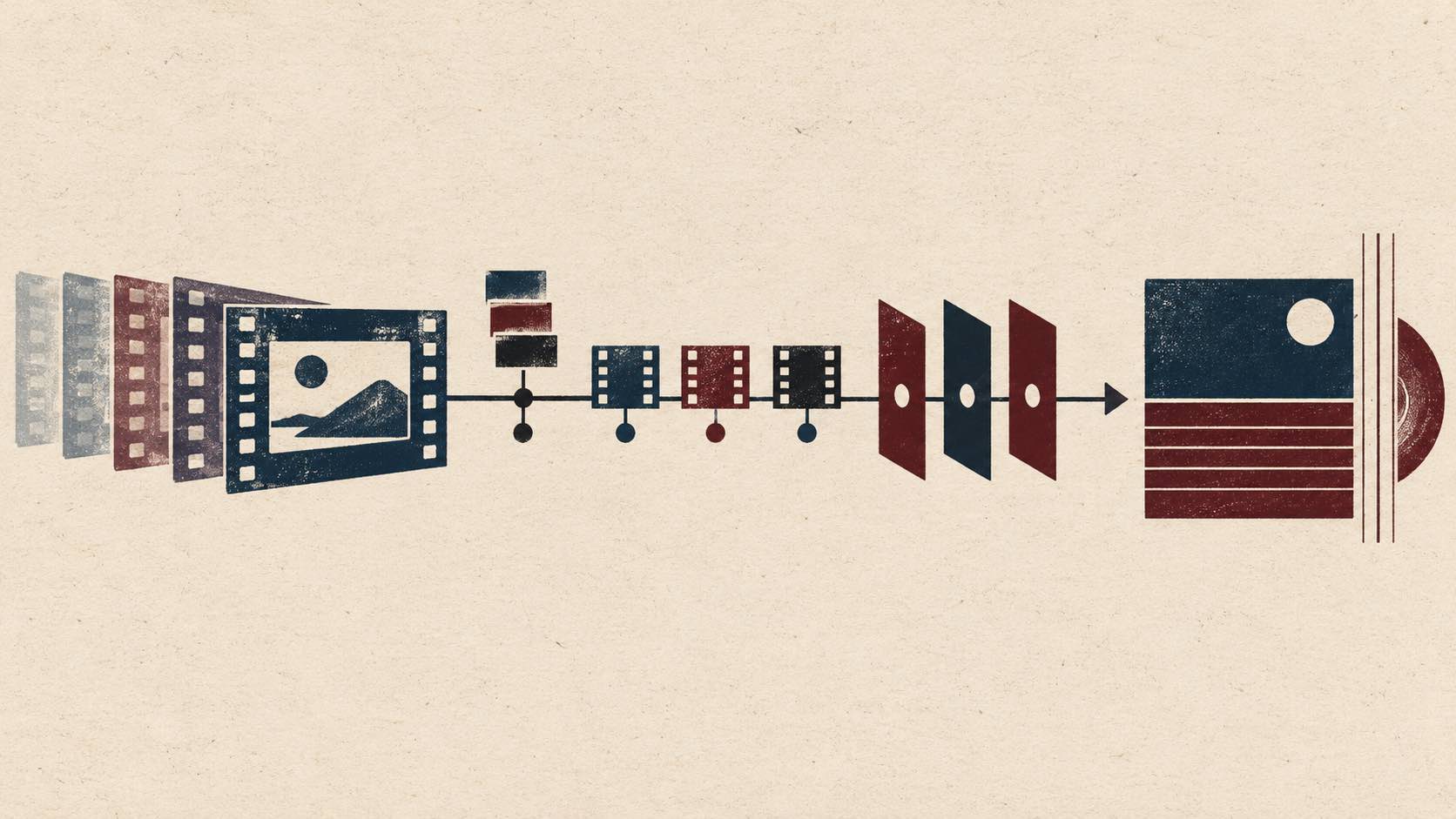
When production sends me picture, I do not need a theatrical master. I need a light, reliable and unmistakably labelled reference that can live inside a scoring session. That sounds like file administration. In practice, it protects creative work.
A missing burn-in or an unannounced recut can turn a clear approval into a sync problem. The question is not only whether I can move a cue back into place. I also need to know whether the dramatic decision behind it still holds.
This is the picture turnover I would ask a producer, editor or post supervisor to prepare before scoring begins.
Give every cut a unique identity
The filename should identify the project, cut number and date before anyone opens it. feature_v12_2026-10-13 is more useful than final_export_new.
Avoid using final as the only version marker while editorial is still active. A continuous version number gives the whole team one shared reference and makes later change notes easier to trace.
I also like the cut identifier visible in the picture, at least on the head slate. Files get renamed during uploads and downloads. The embedded label survives that journey and makes it harder to score the wrong cut by accident.
This is especially important when a composer, music editor and picture department are working in different locations. Each person should be able to answer the same question quickly: which cut is this?
Burn in usable timecode
Visible timecode gives editorial and music a common address system. I can place a note at a precise moment and the editor can find it without translating between two timelines.
The burn-in should be legible without covering faces, subtitles or essential action. It should also match the file timecode or the convention stated by editorial. A counter that looks official but points somewhere else is worse than no counter because it creates false confidence.
State the frame-rate and timecode convention in the turnover message. I should not have to infer either from a compressed file. A playback-rate mismatch can create sync drift. Confusing drop-frame and non-drop-frame conventions mainly creates misleading cue addresses because those conventions change the numbering, not picture playback.
If editorial changes the frame-rate convention during post, flag that separately. It is not just another filename update. Music sessions, spotting notes and exports may all refer to the earlier clock.
Include a useful reference mix
The picture file should carry a reference mix in which dialogue, effects and temp music can be understood. It does not need to resemble the final dub. It needs to show me the dramatic environment the score will enter.
Keep the temp track audible if it shaped the cut. Removing it hides evidence about pacing and expectation. Label it clearly, though. I need to know what is licensed, what is provisional and what the original score is expected to replace.
When available, a separate dialogue-and-effects reference can help me judge density. It is not a substitute for final stems or a proper turnover to the dub. It is a practical way to hear whether a musical gesture will compete with speech or with a major sound-design event.
Say whether this is exploration or picture lock
I do not always need full picture lock to begin. Early work can define themes, palette and the relationship with the temp track while editorial continues. The risk comes when a working reference is treated like locked picture without saying so.
A working cut supports exploration. A locked cut supports detailed sync and final deliverables. Those jobs overlap, but they do not carry the same cost when picture changes.
In the first turnover note, tell me which sequences are stable and which may still move. I can then schedule the score around certainty. A structurally important locked scene may be the right first cue. A montage that is still losing shots may be better left as a sketch.
A work-for-hire agreement does not remove the need for this production conversation. Whatever the contractual structure, the team still needs a shared operational definition of approval and picture status.
Send change notes with every new cut
A replacement movie without notes forces the composer to hunt for differences. A short change list is enough: scene trimmed, shot added, transition moved, main title shortened, sequence reordered.
The useful question is what each picture change does to music. Some changes require only a reconform. Others change the shape of a cue or invalidate the reason it entered at all.
Two seconds can be harmless under a sustained texture and decisive inside a build that lands on a look. Runtime alone does not describe the musical impact.
Keep the previous picture available until the new one is confirmed. Reversions happen, and comparison is faster than reconstructing an old cut from email history. If a music editor is involved, agree who owns the reconform and who confirms that the new session matches picture.
Optimise for playback, not spectacle
The scoring reference should play smoothly, scrub quickly and loop without destabilising the session. A very large movie file can be less useful than a sensible compressed export with enough detail to read performance and editorial rhythm.
For initial experiments, selected scenes may be sufficient. Once spotting and cue architecture begin, I want the complete film or episode. Musical absence is part of the plan. Without the full cut, I cannot judge how a cue relates to earlier material, later silence or the total score load.
Use one clear transfer route. A named link, an expiry date that covers the work and a concise turnover message beat a trail of competing uploads. Access problems should be solved before the review session, not while everyone is waiting to press play.
A compact turnover checklist
The first picture delivery can be described in one page:
- project name, cut number and export date;
- stated frame rate;
- visible, matching timecode;
- reference mix with temp tracks identified;
- current picture status;
- sequences still expected to change;
- owner of future cut confirmations;
- next spotting, review and delivery dates.
I would also agree on the naming of music deliverables and stems early, even though they arrive later. Picture and music versioning should belong to the same post-production conversation.
A clean turnover does not make the score expressive on its own. It removes avoidable uncertainty. That leaves more of the schedule for the choices that matter: what the audience should feel, where music should begin and when the film is stronger without it.